Thursday, October 1, 2026


®
The World's Local News Source®

Cherryville, NC (WNN) - Last night, February 17th, 2026, Cherryville Elementary School released a statement asking that students stay home if they're sick, as they've noticed an increase in cases over the last week. This correlates with stats from the Centers for Disease Control.
Per their update, the Elementary school asks that children who are experiencing a fever of 100.4 or more, vomiting or diarrhea, aches, coughs, chills, and fatigue, as well as sore throats, be kept home and monitored. They also ask students not to return until 24 hours after completing treatment and being fever-free for 24 hours. These are good rules for parents and other adults who are experiencing symptoms as well, because this will help stop the spread of the disease.
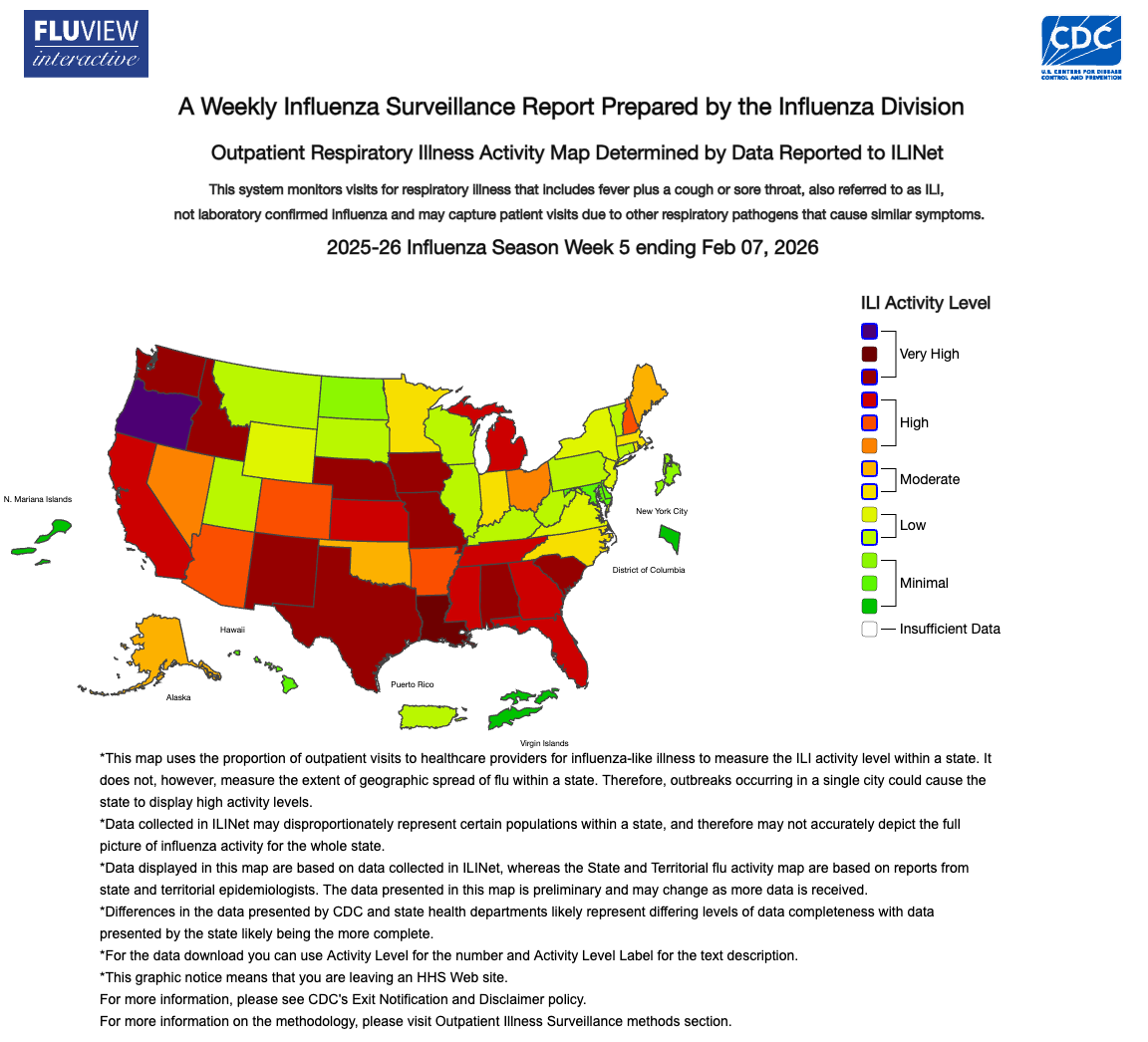
In their most recent report on Influenza, which uses a dataset from February 1 through the 7th, they noted that flu cases are up 18.6% nationally, with most cases being influenza A. In the same survey, they found that respiratory illness is up 4.6% as well. According to their map for this week, North Carolina is currently seeing a moderate amount of cases; however, surrounding states are experiencing higher numbers. South Carolina, currently marked as "very high," could be an entry point for the virus, as it borders Gaston County. On a lighter note, the CDC also reports that, despite an uptick in cases, hospitalizations, and flu-related deaths, are currently on a downtrend.
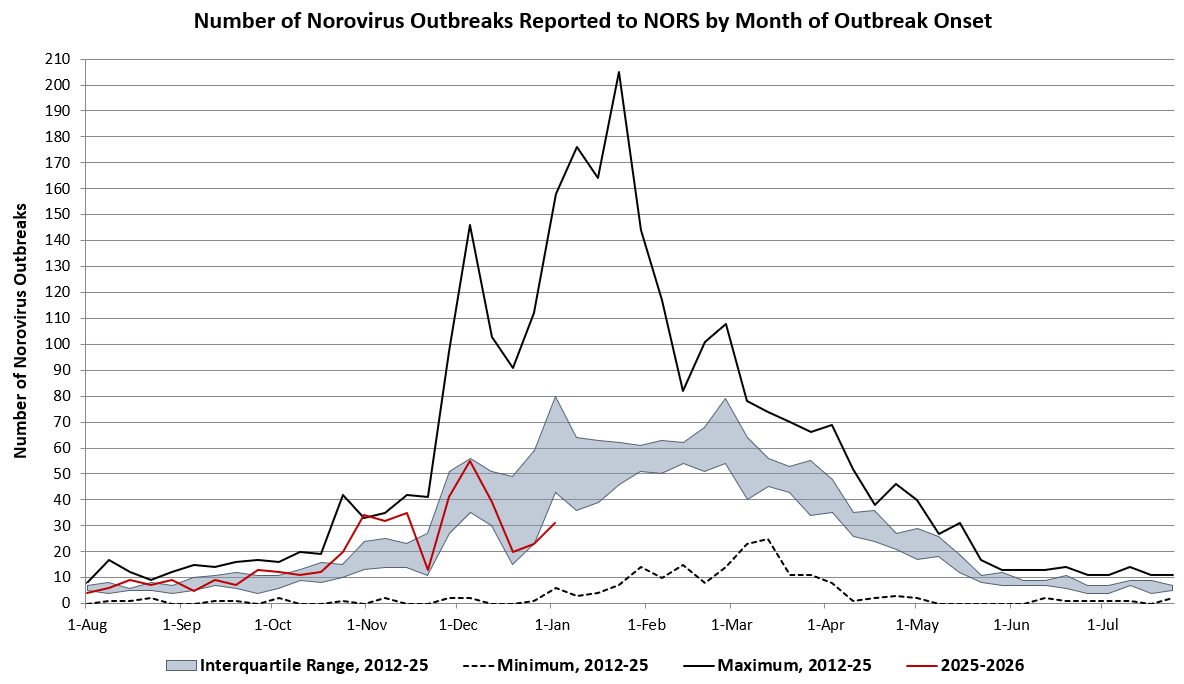
The "stomach virus," or Norovirus, saw fewer outbreaks than predicted during the last measured period. In January 2026, only 30 outbreaks occurred, which is lower than the expected range of 40 to 80. An outbreak, as defined by the CDC, happens during one of three conditions. If a given time period, specific location, or target population experiences more cases than expected, it is considered an outbreak. Almost every year, February is a bad month for stomach viruses, with higher minimum outbreaks on average.
While the CDC doesn't report on strep as often, they do note that group A strep cases have been increasing since 2014, with them reaching an all-time high in 2023. UK data suggests we are still on an uptick in cases, with January 3% above average there. Like the other illnesses here, strep is "seasonally higher" from December through April, when people are in closer proximity to one another. Notably, rates among children have remained relatively stable, despite their greater likelihood of catching the bacteria. Adults catching the illness is what is currently rising, especially among homeless individuals.
Of course, the main recommendation from doctors is to visit your primary care practitioner if you experience any symptoms. They will be able to determine what you have contracted and prescribe the appropriate medicines. However, there are recommended steps for each illness that can be done without a doctor's involvement.
For those experiencing respiratory illness, such as the flu, to help you manage symptoms and recover more quickly, be sure to drink 10-15 glasses of water each day and increase your vitamin C intake. For fevers and pain, use ibuprofen or Tylenol. Antihistamines such as Claritin or A can help dry out your sinuses, primarily when used with decongestants like Guaifenesin and flonase. Store brands are often cheaper, so be sure to check the ingredients of these medicines to get a better deal. Lozenges and salt water gargles can help with sore throats, and distilled water can be used to rinse out your sinuses, further helping with respiratory illness.

The stomach bug, or Norovirus, can and will leave you dehydrated during its one to three-day span. It is vital that you attempt to retain fluids despite the symptoms. The main way it spreads is through contaminated surfaces, foods, and people. It can be stopped by making sure cleanliness is a priority. For those experiencing it or caring for those with it, wash your hands often, clean clothes in hot water, and clean and disinfect utensils and surfaces to the best of your ability. Making sure children bathe and change clothes as soon as possible after returning from school will help stop its spread. The CDC recommends that you do not return to work or school until 2 days after your symptoms end, as it is highly contagious and can still be spread up to 2 weeks after recovery.
Unlike the other illnesses being looked at here, Strep Throat is not a virus. It is a bacterium and therefore requires antibiotics to treat. Not treating it can prolong the disease and increase the likelihood of transmission, so this one will need a doctor's visit if you suspect you or your child has contracted it. However, as with any illness, washing your hands often and not eating after other people is the best way to prevent it. Despite being painful, high fluid intake will also help quicken recovery here. It is also recommended to replace your toothbrush if you know you have contracted strep.
Overall, the cleanliness of everything from your counters to yourself will control how likely you are to get sick. Using grocery delivery or picking up from the store can help prevent transmission. In that same vein, picking up food from restaurants instead of sitting down inside helps prevent illness. Fruits and veggies need to be washed, as many people handle them along the way to your home. Hot water helps sanitize clothes and linens during cleaning. Providing infected people with disposable cups and utensils will help prevent the spread of viruses in shared areas. However, as always, if you or someone in your household has symptoms, it is best to remain home when possible.
For more WNN video news stories, visit YouTube: https://www.youtube.com/@wisenewsnetwork
For further WNN articles and news stories, visit: https://wisenewsnetwork.com
Contact WNN at newsdesk@wisenewsnetwork.com
Copyright 2024 Wise News Network. All rights reserved.


